Colombian Free Banking
Between 1870 and the mid-1880s, dozens of private banks and commercial houses issued their own paper money in different regions of Colombia —an era of “free banking” that ended with Banco Nacional’s curso forzoso in 1886, although the tradition of regional and private issue continued, in other forms, well into the twentieth century.
A Currency for Each Region
In the mid-nineteenth century the Colombian economy still ran mainly on gold and silver coin and on foreign coins. The true boom of modern paper money arrived with the success of the Banco de Bogotá, founded in 1870: backed by real reserves and the confidence of local commerce, its banknotes were the first accepted on a large scale in the country.
After that initial success, a true era of “free banking” opened: dozens of issuing entities —among them Banco de Antioquia, Banco de Colombia, Banco de Bolívar, Banco de Bogotá, Banco de Pamplona, and numerous commercial credit houses such as Vicente B. Villa é Hijos in Medellín— printed their own banknotes in the country’s different commercial plazas, manufactured to high security standards by foreign engraving firms, mainly in London and New York.
This plurality of issuers ended abruptly with the Regeneración: in 1886 the government decreed the “curso forzoso” (forced legal tender) of the newly founded Banco Nacional’s banknotes, gradually eliminating the regional private banks’ right of issue. The civil war of 1884–1885 —which coincided with the decline of banks such as Pamplona’s— and the later Thousand Days’ War (1899–1902) finished off a large part of this first generation of free banking.
The tradition of regional and private issue did not disappear entirely: decades after the centralization of the currency at Banco de la República (1923), entities such as El Banco de Caldas in Manizales continued to issue their own cédulas hipotecarias —private credit instruments, no longer legal-tender banknotes— carrying on, in their own way, the spirit of nineteenth-century Colombian regional banking.
Chronology and Scope of the System
Historiography places the formal birth of Colombian free banking in 1865, with the enactment of two banking laws: the Law of 7 February (Sovereign State of Cundinamarca) and Law 35 of 6 May (at the national level).1 Under the Rionegro Constitution of 1863, which reduced the central government to its minimum expression, each of the nine Sovereign States of the Union developed its own banking system, with varying degrees of regulation and competition.1 The number of issuing banks in the country grew steadily until it reached a peak of 37 entities in 1884, the year the civil war broke out that would hasten the end of the system.1
The Sovereign State of Santander —where El Banco de Pamplona was founded in 1882— experienced the highest level of banking deregulation in the country: its 1865 state constitution even allowed units of account other than the peso and the use of foreign currency in commerce.1 After the closure of the region’s first bank, Banco de Santander (1872–1879), three entities arose to fill the gap: Banco del Norte (1881), Banco de Pamplona (1882), and Banco Prendario de Soto (1883), the last founded to serve the poorest sectors of society.1
The system ended in 1886. After the civil war of 1884–1885, Banco Nacional was declared the official bank of the State and, by Decree 104 of 19 February 1886, President Rafael Núñez’s government established the Banco Nacional note as the sole monetary standard, of curso forzoso (forced legal tender); the following year the private banks’ faculty of issue was suspended entirely, as part of the centralizing project known as the Regeneración.1
Vicente B. Villa é Hijos, Medellín (188X)
El Banco de Pamplona (1883–1884)
El Banco de la Unión (1883)
El Banco del Cauca (1888)
El Banco Unión (188X)
El Banco de Caldas (1919)
El Banco de Barranquilla (1900)
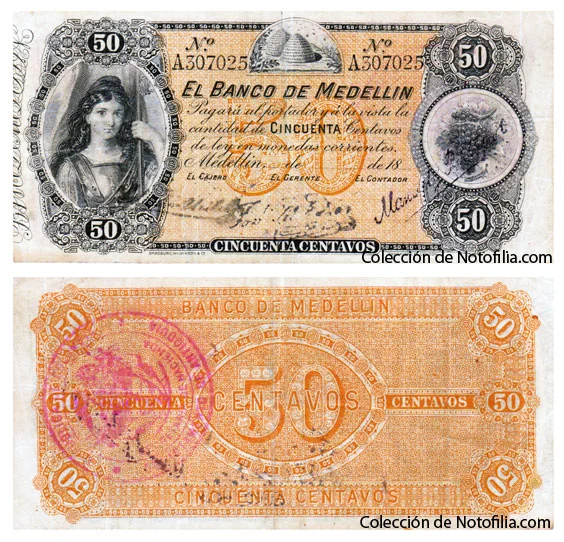
El Banco de Medellín (188X)
El Banco de Oriente (1888)
El Banco Internacional (1884)
Banco de Antioquia, Libranza (1900)
Departamento de Antioquia (1961)
El Banco de Panamá (late nineteenth century)
El Banco del Norte (1882)
El Banco de Colombia (1919)
Notes
1. Chávez Salazar, Nelson David. “Una revisión microeconómica del episodio de Banca Libre en Colombia: 1865–1886.” Procesos de Mercado: Revista Europea de Economía Política, vol. XIV, no. 2, Autumn 2017, pp. 259–289.
-
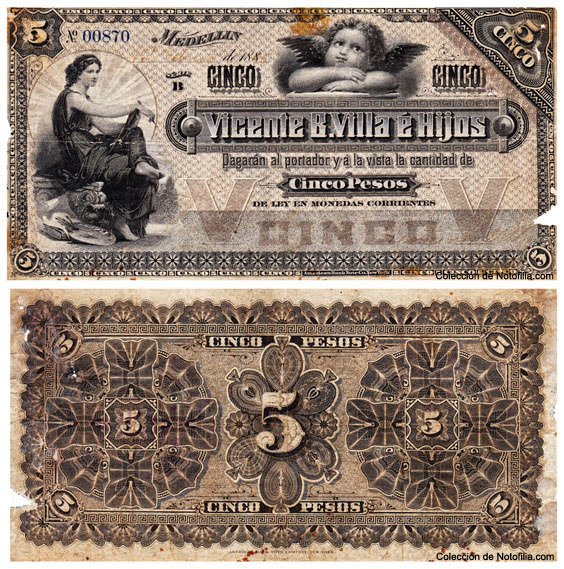 188X Five Pesos Vicente B. Villa é Hijos
 -
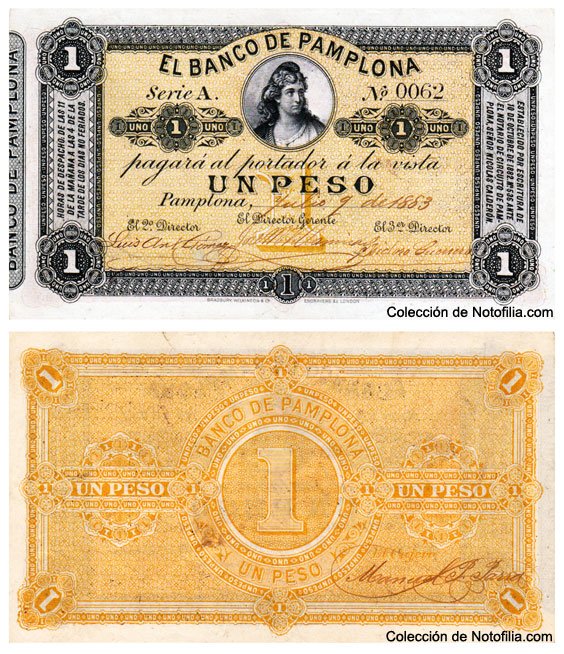 1883 One Peso El Banco de Pamplona
 -
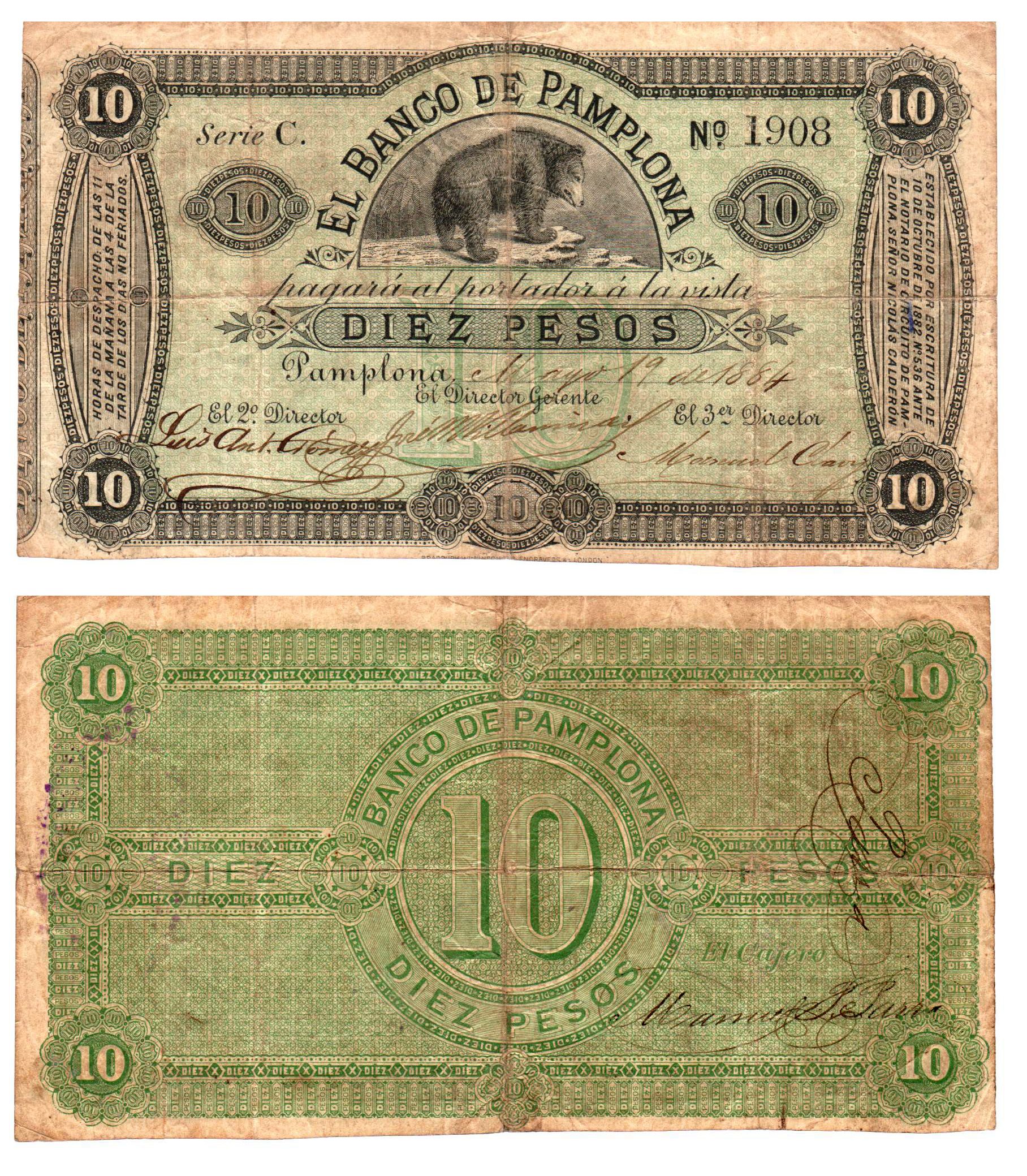 1884 Ten Pesos El Banco de Pamplona
 -
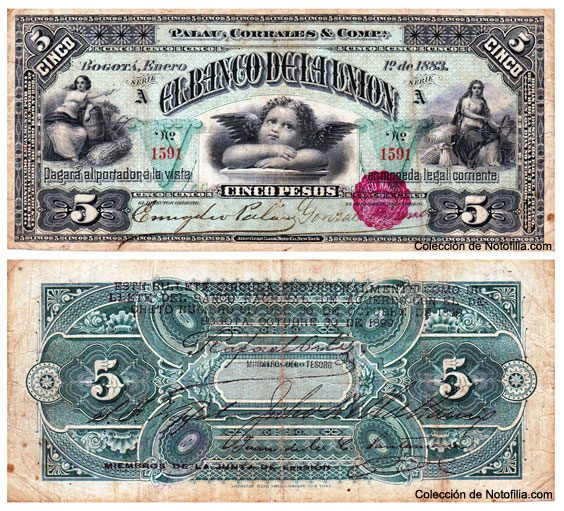 1883 Five Pesos The Union Bank
 -
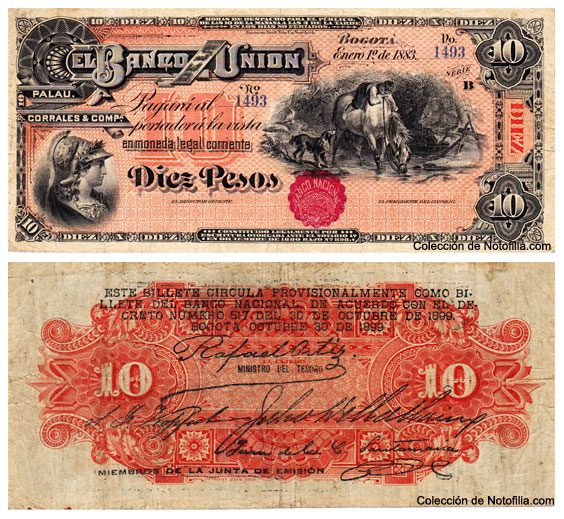 1883 Ten Pesos The Union Bank
 -
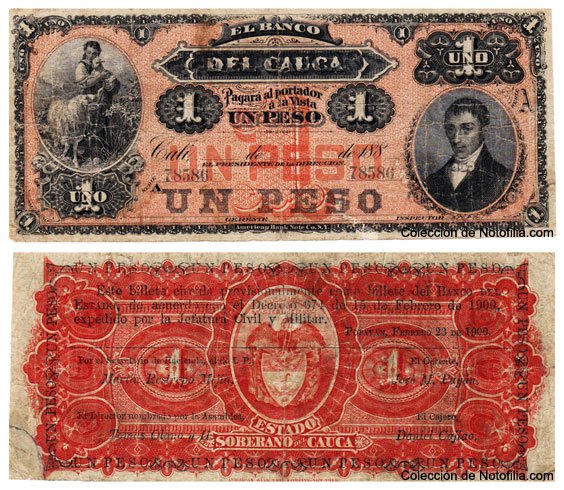 1888 One Peso The Bank of Cauca
 -
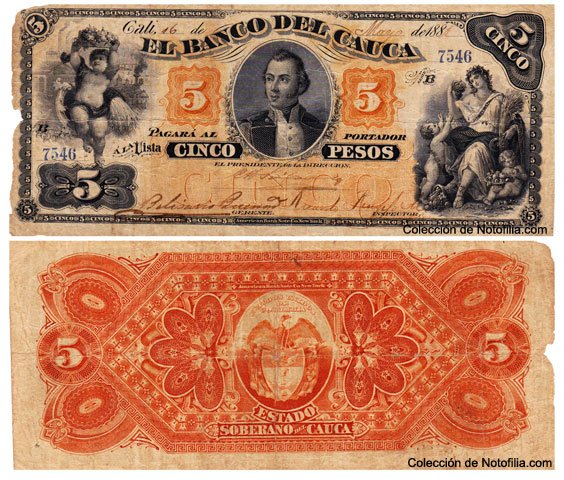 1888 Five Pesos The Bank of Cauca
 -
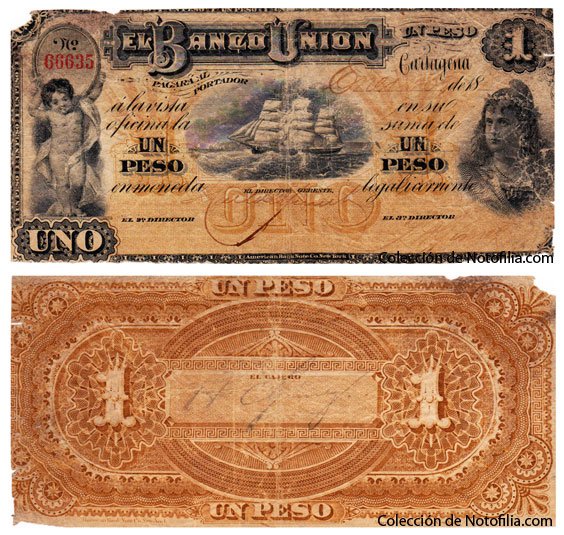 188X One Peso The Union Bank
 -
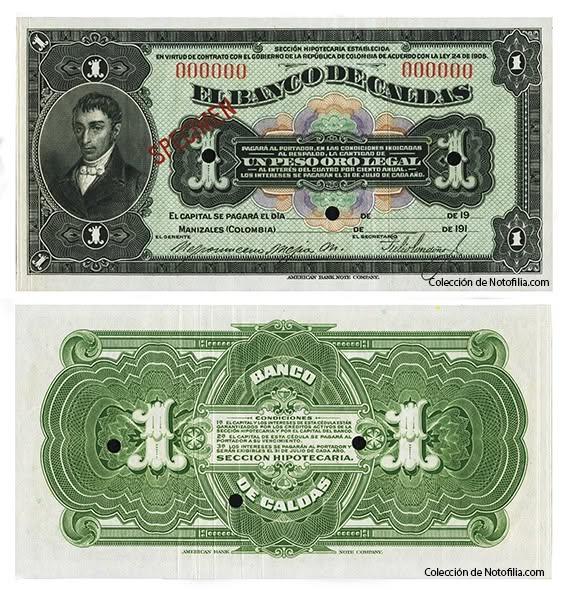 1919 One Peso Oro El Banco de Caldas
 -
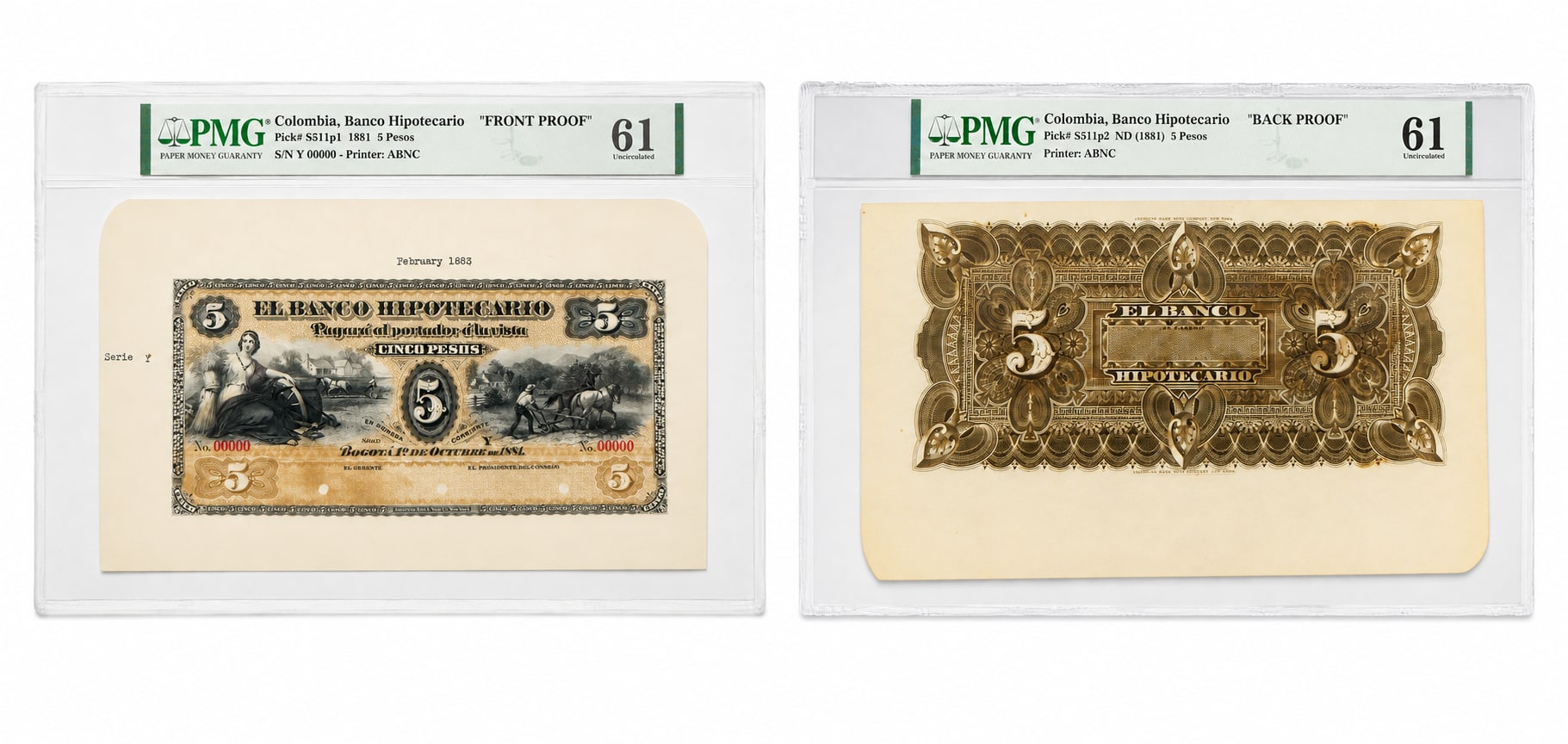 1881 Five Pesos (proofs) El Banco Hipotecario
 -
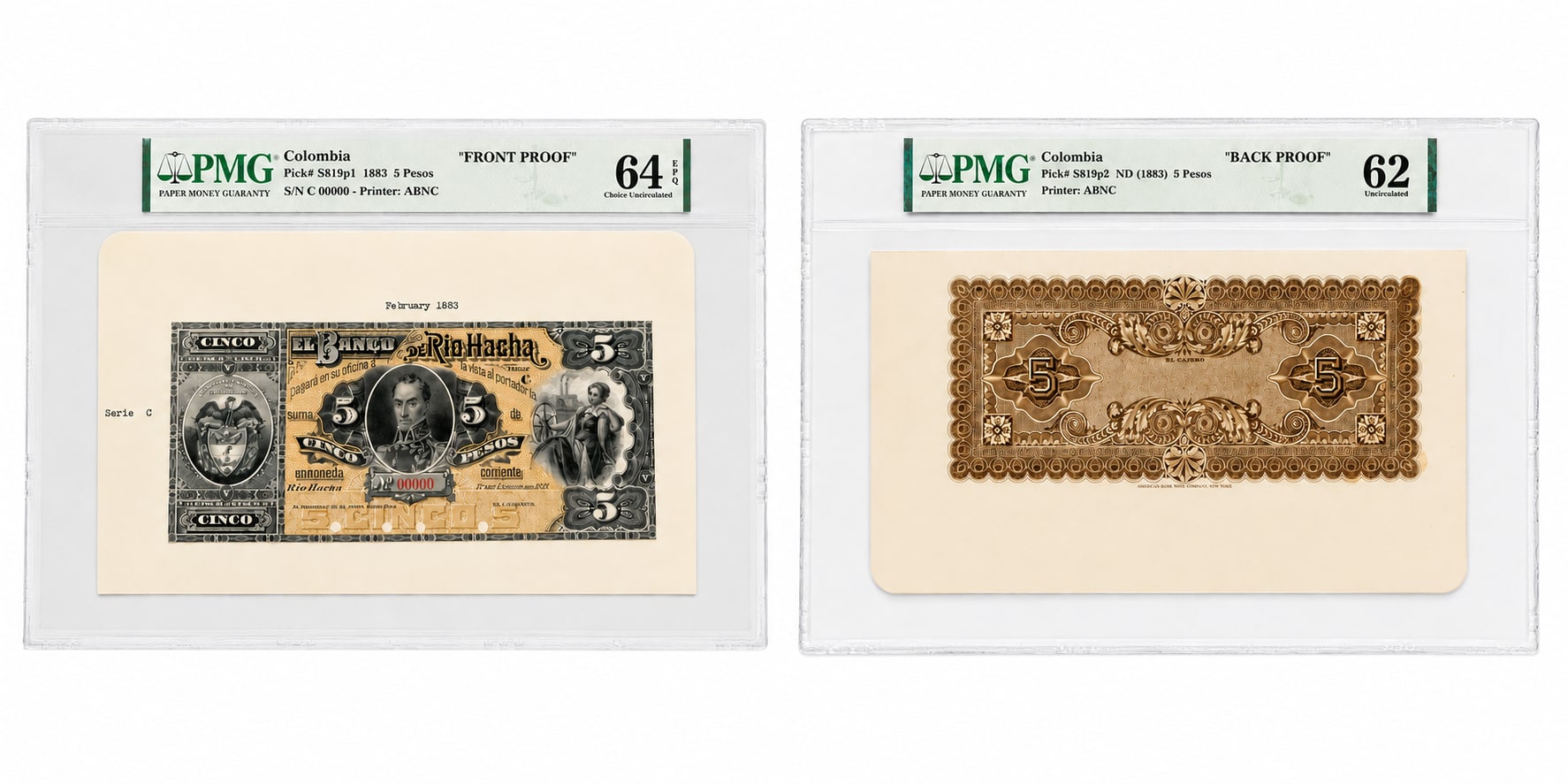 1883 Five Pesos (proofs) El Banco de Rio Hacha
 -
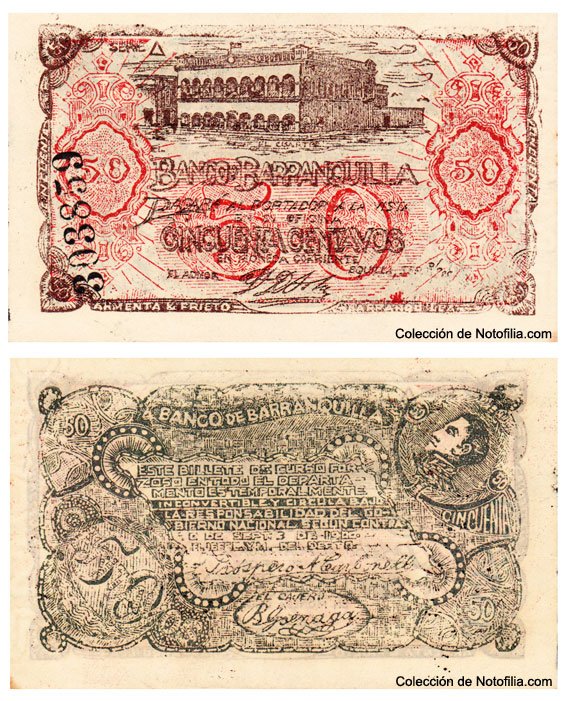 1900 Fifty Cents El Banco de Barranquilla
 -
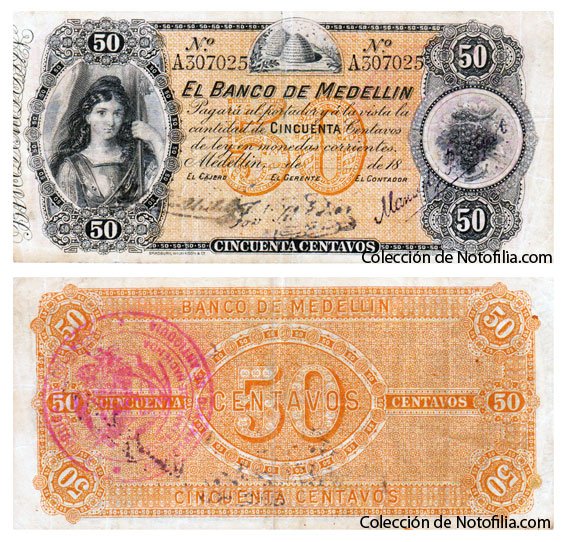 188X Fifty Cents The Bank of Medellin
 -
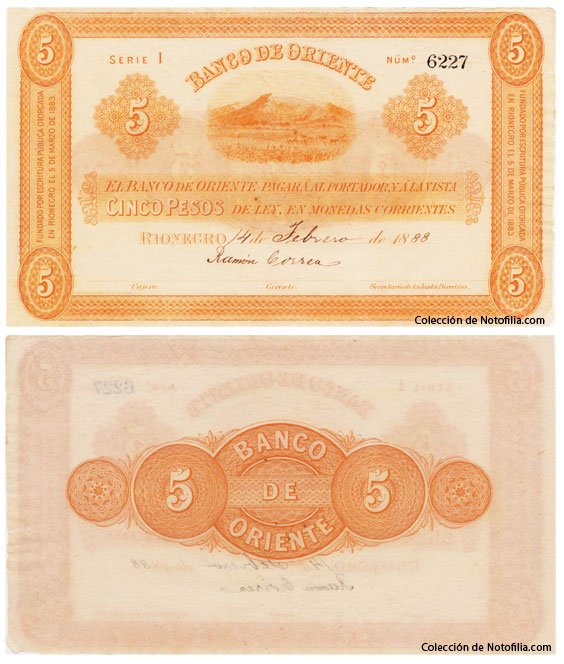 1888 Five Pesos El Banco de Oriente
 -
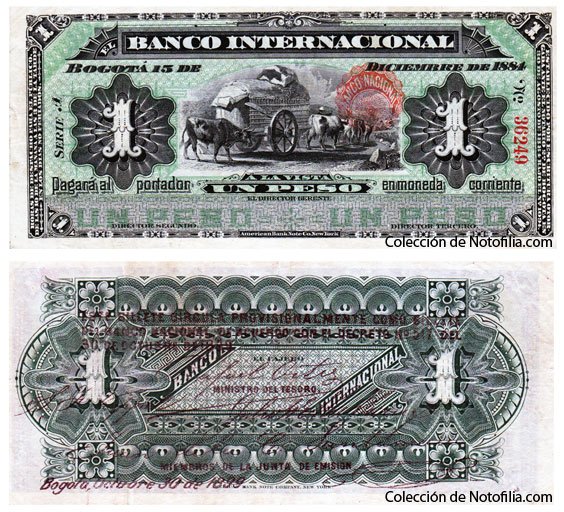 1884 One Peso El Banco Internacional
 -
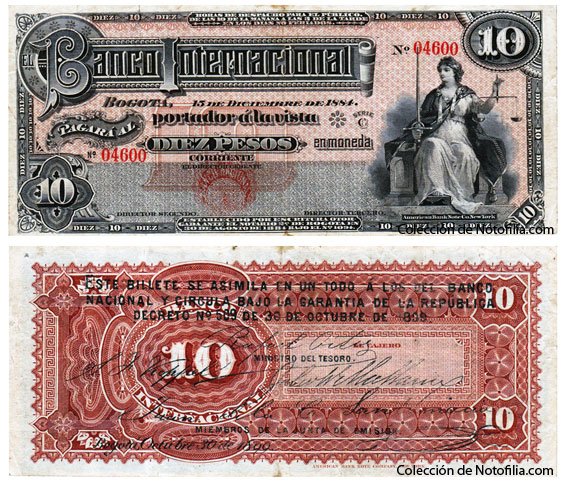 1884 Ten Pesos El Banco Internacional
 -
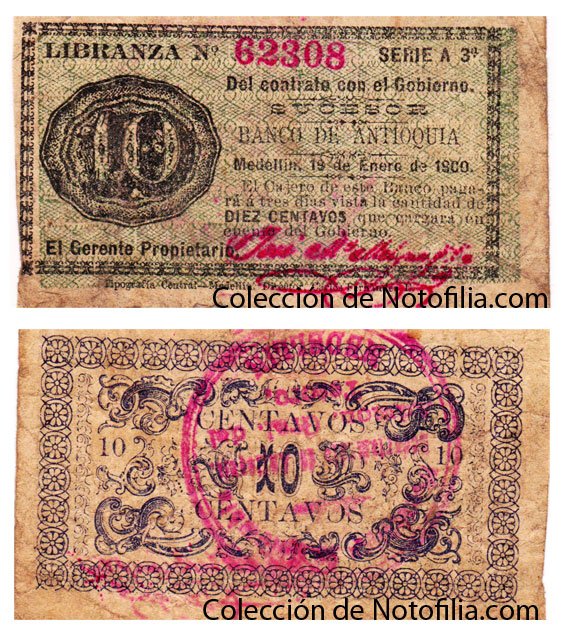 1900 Warrant, Ten Centavos Banco de Antioquia
 -
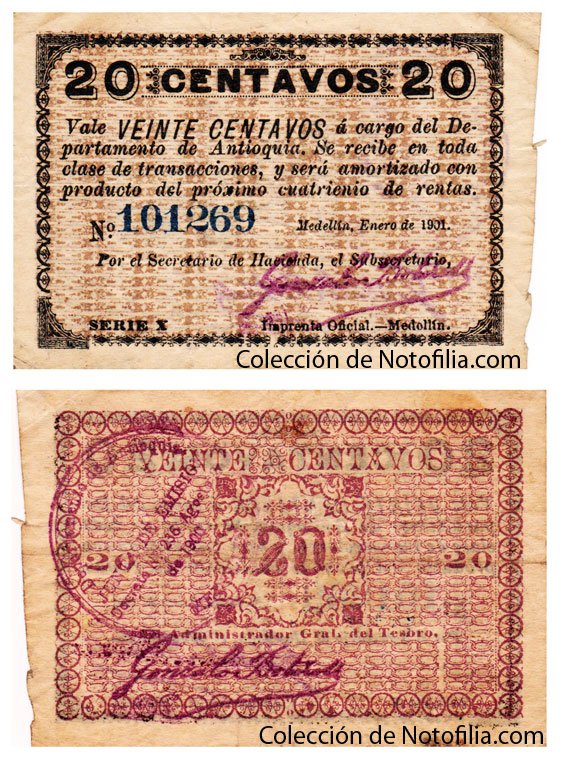 1901, 1961 Vales, 20 and 10 Centavos Department of Antioquia
 -
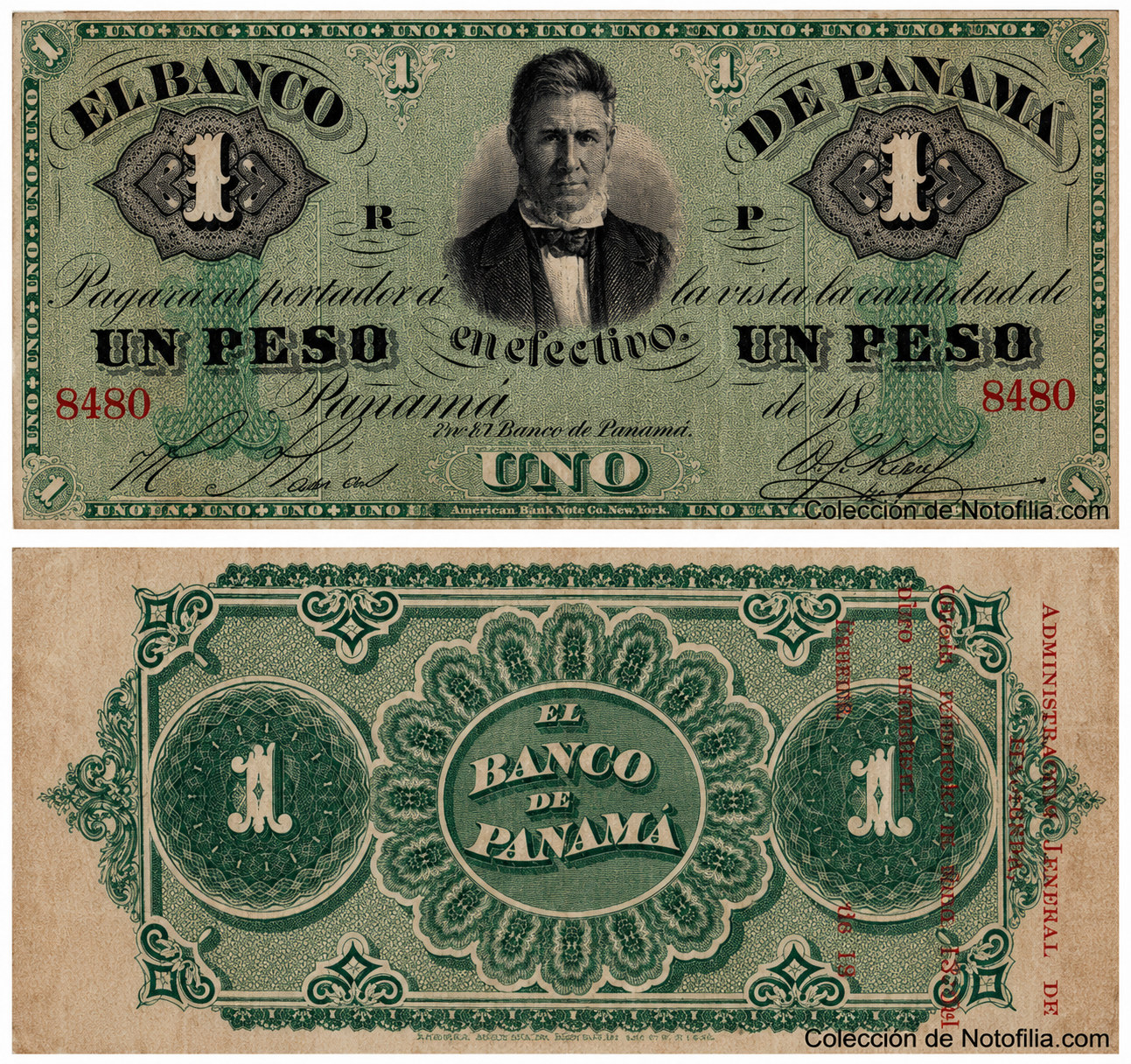 188X One Peso The Bank of Panama
 -
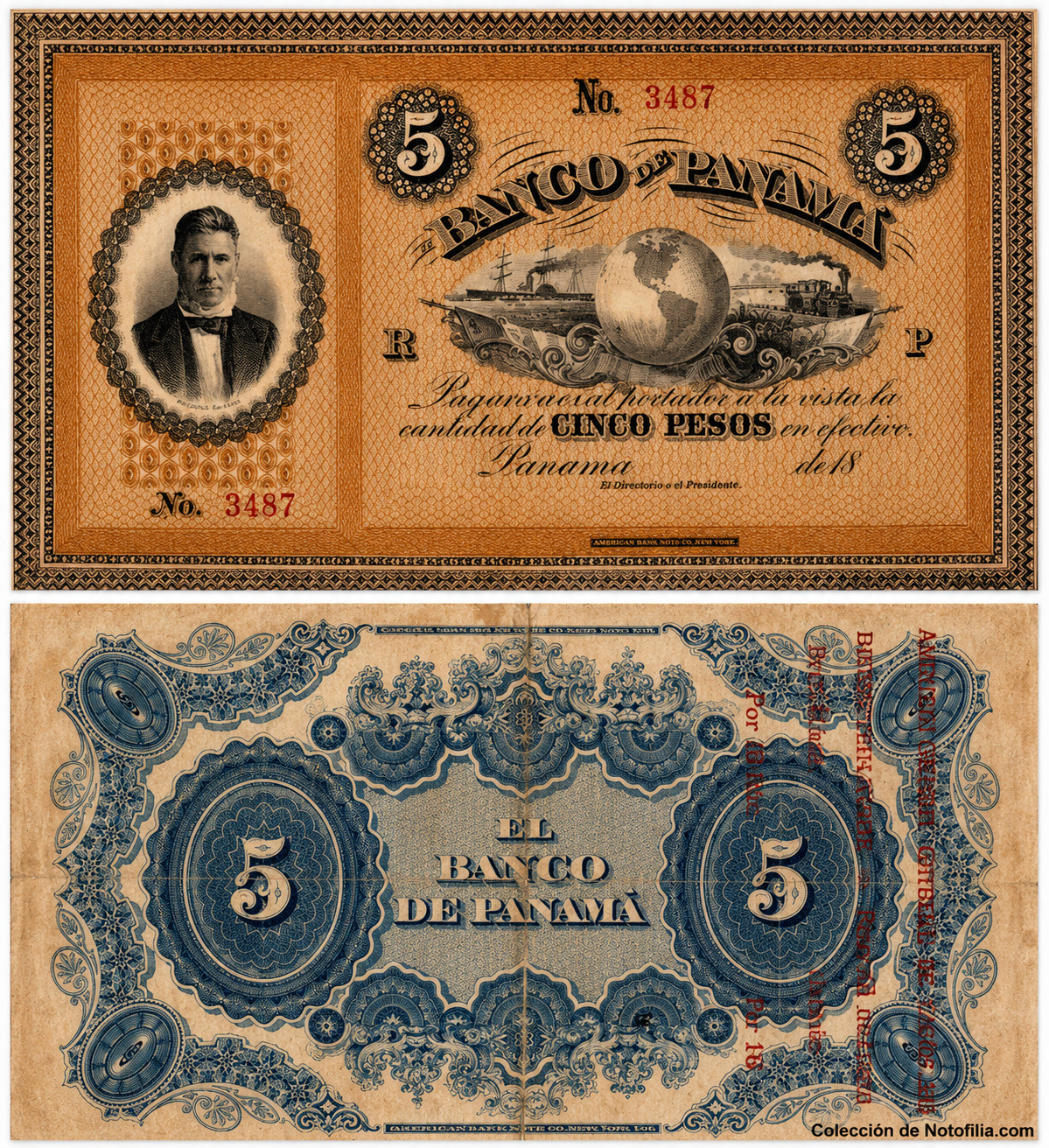 188X Five Pesos The Bank of Panama
 -
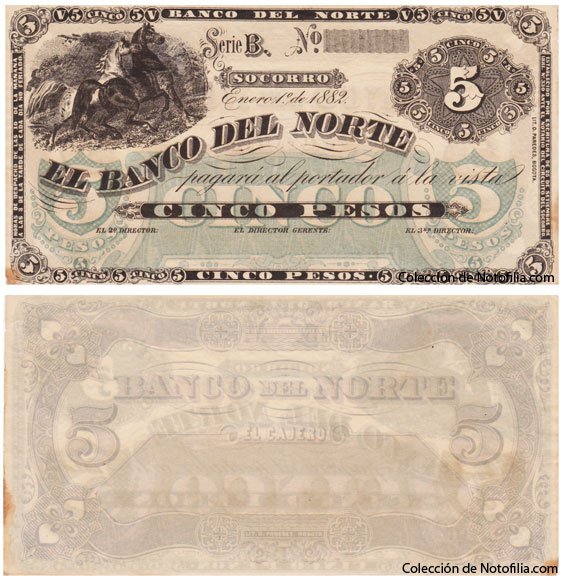 1882 Five Pesos The North Bank
 -
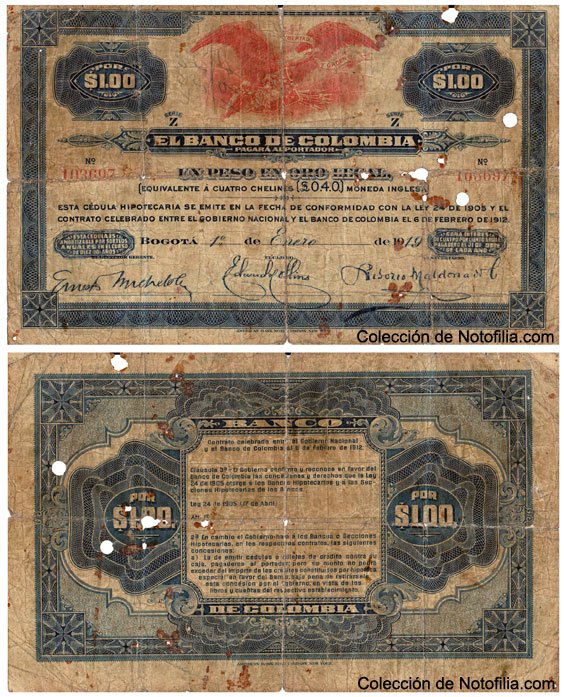 1919 1 Peso Oro (mortgage certificate) El Banco de Colombia